How Automated Marketers Work in Real Campaigns
Updated: 02 Feb 2026
Automated marketers are software tools or platforms. They handle marketing tasks without constant human input. They manage email campaigns, social media posts, lead generation, customer segmentation, and performance tracking automatically. Businesses use them to save time to improve their consistency, and target the audiences more precisely.
They are not bots who replace people. They are systems-driven operators who use software to run repeatable campaign actions based on data, rules, and timing. Their strategies stay human. But their execution becomes systematic.
Table of Contents
Why Automation Exists in Modern Campaigns
In real campaigns, manual work stops working once the brand scales or grows. I’ve handled campaigns with many channels and users. Humans simply don’t react fast enough. Automation exists to keep campaigns stable, make them responsive, and controlled when volume increases every day. Manual marketing breaks when brands start to grow fastly. More channels, more users, more signals. Humans can’t handle them fast.
Automation solves three real problems:
- Speed of response
- Consistency across channels
- Control at scale
Campaigns slowly lose direction without automation. Campaigns react on time, stay aligned, and perform with fewer mistakes with automation in place.
| Marketing Workflow Tools for Real Campaigns |
|---|
|
Here are the 5 major steps of live campaigns: PlanningAutomation always involves planning. Every workflow starts with a clear goal like leads or sales. I draw the map of the full journey on paper and do not use any tool. This avoids confusion in future and makes automation focused on one outcome instead of many. Automation works best when posting, email, and ads work together side by side. Social schedulers like VistaSocial play a big role here, especially when campaigns run across multiple platforms. TrackingTracking connects all users in their track of activity with their results. Automation reacts to wrong signals without clean tracking. During actual campaigns, I always double-check events like form fills and purchases before scaling. A single damaged tag easily wastes weeks of automation time. ExecutionExecution is the main part of the automation process. Tools act the same way we set them. Ads are initiated, emails are dispatched, and rules activated This is handled through platforms like Hubspot, Google Ads and email systems. When the system is live it runs nonstop, even when teams sleep. MonitoringWhen you monitor everything during automation it is safe for the whole process. I review performance dashboards weekly but not the hourly basis. Automated marketers focus on trends. When prices go higher or conversion drops we easily stop campaigns and pause before damage grows. |
How Retail Campaigns Managed by Automated Marketers
Retail campaigns deal with both online actions and physical store visits. I’ve worked with brands where store visits mattered as much as clicks. Automation helps to connect digital signals with in-store activity. It keeps the promotions aligned everywhere. Retail automation blends online and offline signals. Automation helps connect both sides.
In retail, automation often handles:
- Local ad scheduling
- Promotion timing
- Audience segmentation by location
- Follow-ups after in-store visits
Marketing automation in retail works best when offers are consistent across channels. Conflicting the spam messages confuse buyers and reduce trust.
Automation doesn’t replace marketers. It replaces confusion. Clear workflows turn tools into reliable systems.
How Automated Marketers Run Small Business Campaigns
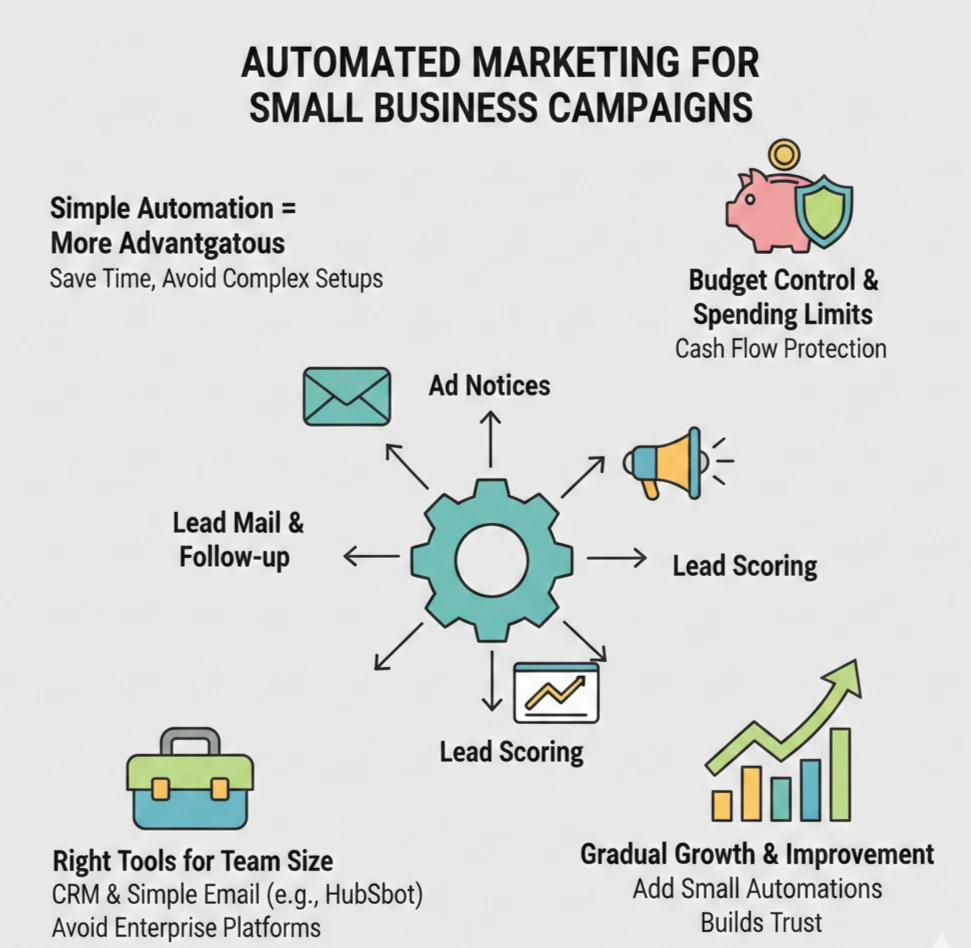
Simple automation is more advantageous to small businesses. I have ensured local and online brands have been developed without huge teams by maintaining lean systems. Time is to be saved, and complex setups are not to be constructed.
Focus
Focus means automation of repeating. In the small business case, those are lead mail, follow-up and ad notices. I avoid overbuilding. A single workflow is more effective than five complicated workflows.
Budget
The speed is not as important as the budget control. I always fix the spending limits and triggers. In this way, automation does not go outside of the comfort zone. Automatic protection of cash flow by systems is a security for small firms.
Tools
Tools should match team size. Typically, my initial investments are a CRM system, such as HubSpot, and a simple email. At the beginning, there was no necessity to use enterprise platforms. Simpler less complex tools save on errors and training.
Growth
Constant improvement brings about growth. Once the results stabilize, I add small automations methods such as lead scoring. This is a gradual method that gains trust and does not fear automation replacing control.
CRM integration is the backbone of automation. Campaigns operate blind without it. I’ve seen campaigns go through continuous struggle until marketing and sales data are connected. Once CRM data flows correctly. Automation starts making smarter decisions instead of guessing.
Marketing automation integration with CRM allows:
- Lead scoring based on behavior
- Automatic sales notifications
- Clean handoff between teams
- Better reporting on real revenue
When CRM data flows correctly, automated marketers improve quality. It is not just volume.
Ecommerce Campaign Execution With Marketing Automation
Ecommerce automation is all about timing. I’ve worked on stores where one email recovered more revenue than ads. Automated marketers focus on moments, not messages.
Traffic
Traffic automation controls advertisements and traffic. When visitors come as a result of the advertisements, systems tag the actions immediately. This assists in isolating the buyers and browsers and remarketing to concentrate on truly interested people.
Cart
The easiest of the easy wins is cart abandonment. I’ve seen stores recover 10–20% of lost sales using simple triggers. When a cart is left alone, automation sends reminders without waiting for manual action.
Repeat purchases are done via email flows. The automated marketers create sequences through purchases. One time customers receive different messages as compared to the loyal buyers. This makes emails active and cuts down pageviews.
Scale
Scaling ecommerce refers to stock tracking and margins. Automation is always associated with inventory data. There’s no point in running ads for products that are low in stock or low in profit.
| How Agencies Execute Client Campaigns by Automation |
|---|
|
Agencies run automation with specific structure. They don’t use any shortcuts. They build repeatable systems across every client account. I’ve worked inside agency setups where this system saved hours each week without hurting quality. Templates of automation keep launches consistently. Automated reports of workflow reduce their manual checks. Budget pacing rules prevent overspend of money before something good happens. Quality checks catch errors across accounts at a big scale. This setup lowers human mistakes and keeps delivery stable. Clients see predictable performance instead of random spikes. Teams of all system operators stop reacting and start planning. Automation strategy gets every single priority because execution runs in the background. Automation here supports discipline don’t laziness. When processes stay clear, agencies move faster. It keeps the control across multiple clients and platforms. |
Comparison: Manual vs Automated Execution
| Area | Manual Campaigns | Automated Campaigns |
| Speed | Slow reactions | Instant responses |
| Scale | Limited by team | Easily scalable |
| Errors | Human mistakes | Rule-based risks |
| Control | Direct | Guardrail-based |
| Consistency | Variable | Stable |
Most real campaigns use a hybrid approach.
Advantages of Automation in Real Campaigns
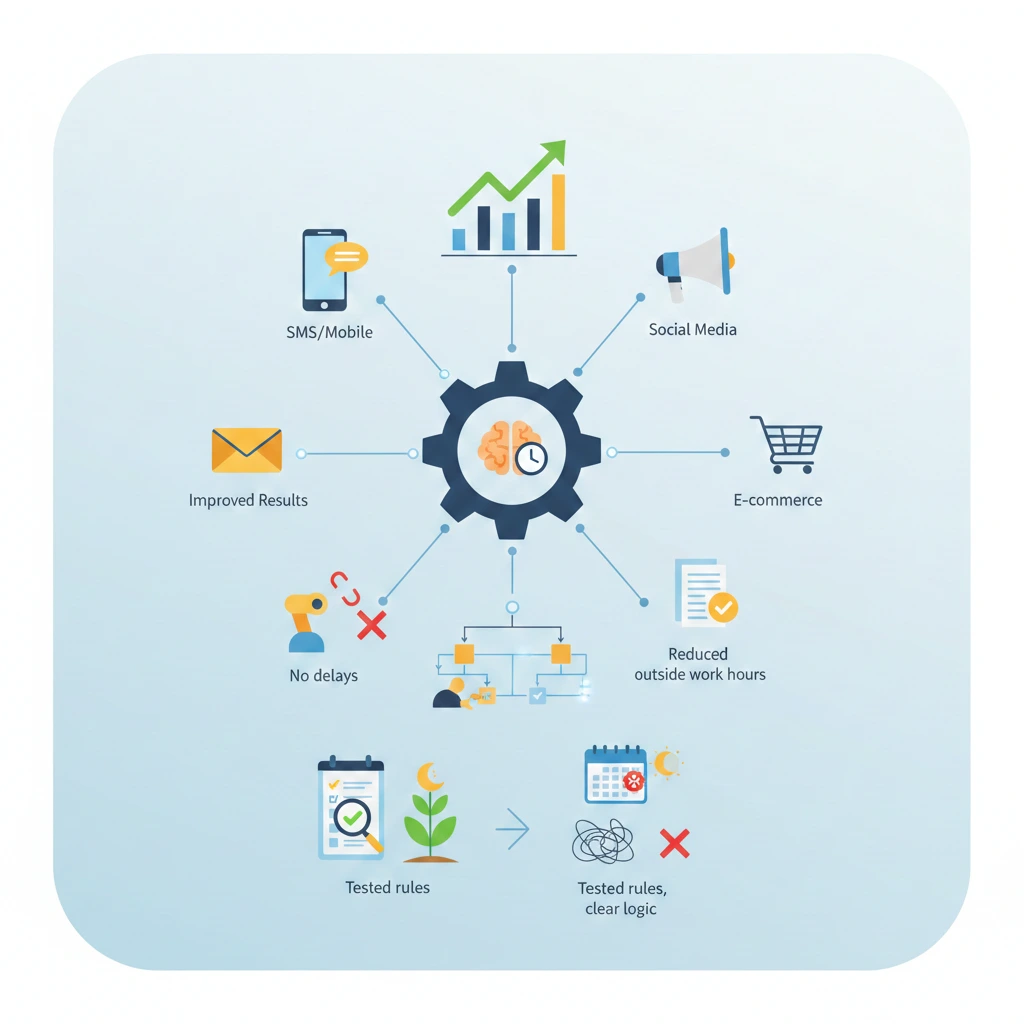
Automation works best in live campaigns and here speed matters. I’ve seen results improve because systems reacted faster than people. Delays disappeared. Execution of workflow is consistent across channels. User actions triggered responses without waiting on teams. Workload dropped as repeat tasks ran on their own.
Fewer steps were missed during busy periods. Campaigns stayed active even outside work hours. Still, rules decide outcomes. Clear logic produces steady gains. Weak logic spreads problems faster. Automation does not fix poor planning. It scales whatever you build into it. When rules are tested and simple. Automation supports growth and control at the same time.
These mistakes repeat often from my experience:
- Automating before fixing tracking
- Too many rules fighting each other
- No clear owner of automation
- Ignoring small data errors
Automation doesn’t fix bad foundations. It exposes them faster.
Is Automation Replacing Marketers?
No.
It changes the role. Automated marketers spend less time clicking buttons and more time thinking about journeys, offers, and timing. Strategy becomes more important.
They review results, adjust rules, check data quality, and plan improvements rather than manually launching campaigns.
No. It frees time for creative testing instead of manual execution.
Basic automation can, but results improve greatly with CRM integration.
Simple automations show impact in weeks. Complex systems take longer to stabilize.
Conclusion
Automation in real campaigns is about control not about replacement. It keeps execution steady when volume, channels, and data grow beyond manual limits. Automated marketers win when goals stay clear, tracking stays clean, and rules stay simple.Workflow tools follow the instructions.
They don’t think. Poor logic scales damage just as fast as good logic scales results. The strongest campaigns mix human strategy with system-led execution. People decide directions of workflow. Systems handle timing and repetition. When automation is planned, reviewed, and owned. Campaigns stay responsive, consistent, and profitable without constant firefighting.