Why Are Modeling Clay Tools Important for Detail Work?
Updated: 02 Feb 2026
Table of Contents
Modeling clay tools are the small, handy instruments artists use to shape, carve, and smooth clay into detailed designs. They turn simple lumps into art with real texture and form. In the middle of every creative process, modeling clay tools help control fine lines and fix tiny imperfections that hands alone can’t manage. These tools make a big difference between a rough model and one that looks lifelike. Even beginners notice how much easier it is to shape, refine, and polish their work when they’ve got the right tools close by.
What Are Modeling Clay Tools Used For?
Modeling clay tools help me turn a lump of clay into a clean, shaped form. Artists use them for cutting, trimming, carving, and smoothing. They make the work faster and give you better control.
When people talk about clay tool names or clay tools names, they often mean basic hand tools like loop tools, ribbon tools, wire cutters, and sponges. Each one does something simple but useful:
- Loop tools remove extra clay and carve deep shapes.
- Ribbon tools clean up edges and add curves.
- Wire cutters slice big clay blocks.
- Sponges smooth out rough areas and keep moisture even.
You’ll also hear about sculpting clay tools and tools for modeling clay used for fine shaping. Once you use them, you’ll see your clean clay.
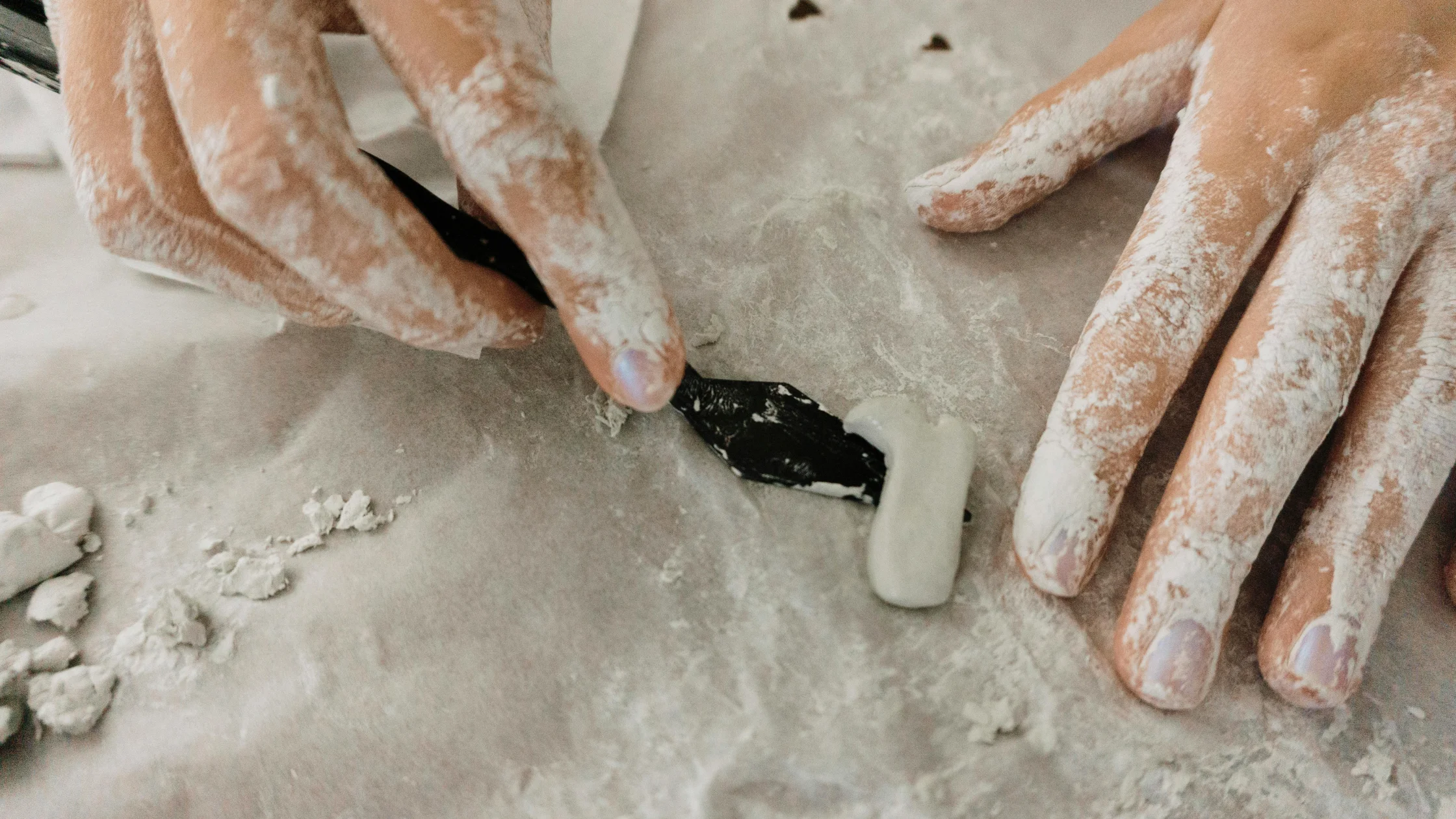
How Do Clay Tools Improve Detail and Precision?
Work clay tools are like a sharp pencil instead of a crayon, they help bring out every fine line and texture that hands alone might miss. You get control, clean lines, and crisp edges. When I work by hand, clay tends to squish or smudge. With fine detail tools for clay modelling, I can draw fine textures or carve smooth lines without hurting the rest of the piece.
Precision tools for clay modelling help to make textures more lifelike. It’s wrinkles on a face or scales on a dragon, small tools add depth and texture that fingers just can’t do.
Tools for fine details also give better surface finish. And when I use a clay sculpting tool instead of my nails, it looks cleaner and more professional.
Here’s a quick table comparing hand-shaping vs. using tools:
| Method | Accuracy | Control | Finish Quality |
| Hand shaping | Low | Hard to control | Uneven surface |
| With tools | High | Easy to guide | Smooth and neat |
So, tools don’t just help, they make detail possible.
| What Are the Essential Clay Tool Names and Their Functions? |
|---|
|
When I first bought my clay tool set, I didn’t even know what half the tools did. Now I’ve learned which ones really matter. Below are the main ones you’ll find in most tool names list kits:
If you’re just starting out, go for beginner clay tools. They’re lightweight and cheaper, and do the same job as advanced ones. As you gain confidence, build up your kit with essential tools that match your sculpting style. |
How to Choose the Right Modeling Clay Tools for Your Project?
If you think about how to choose modelling clay tools, it depends on what you’re making and what kind of clay you’re using. For air-dry clay, I stick with soft silicone or plastic tools. For ceramic or polymer clay, I use metal tips for better carving.
When thinking about clay tools features to look for, I always check:
- Grip and comfort: You’ll hold them for hours, so they shouldn’t slip.
- Tip shape: Pointed tips for carving, flat tips for smoothing.
- Material: Wooden handles last longer; metal parts stay sharp.
A good clay tool kit has a mix of sizes and shapes for different textures. For small projects or miniatures, light tools work better. For bigger sculptures, you’ll want sturdy handles.
Beginners start small. Most modelling clay tools for beginners kits come with about 8–10 tools enough to learn what works best for your hands and clay type. Remember, the quality of tools affects results more than how many you own.
I’ve noticed that good detail makes even simple clay models look alive. The importance of clay tools shows when you add depth and texture. Every small curve or mark tells a story.
This is why clay tools matter they let you fix rough spots and shape smooth, realistic designs. Without them, pieces can look flat or rushed.
When it comes to detail work in clay modelling, small tools help me bring out fine touches like lines on a leaf or folds in fabric. I use modelling clay tools for miniatures when making small animal figures, and clay tools for jewellery making when crafting beads or pendants.
Detail work gives your clay art character. It’s the difference between something that looks handmade and something that looks skillfully crafted.
Conclusion
Working with clay is considerably easier when one has the appropriate modeling clay tools at hand. They help to shape, clean and generate natural textures. After getting used to them, one will be able to see the clay pieces sharpening, becoming more smooth and life-like. This is also how good tools are magic.
The best beginner clay tools are lightweight sets with about 8–10 pieces. Start with loop, ribbon, and needle tools. They’re simple to control and cover all basic shaping needs. Once you’re comfortable, add metal-tip tools for deeper carving and more texture variety.
Yes, but the results depend on tool material. Silicone and plastic tools work best with soft air-dry clay. Metal or wooden tools handle polymer or ceramic clay better since they give cleaner cuts and sharper textures. Match tool strength to clay firmness.
Small detail tools create depth, control, and realism that fingers can’t. They define edges, carve lines, and add lifelike texture. It’s like switching from a thick marker to a fine pen — every small move shows up, and the sculpture looks more refined.